Pienza
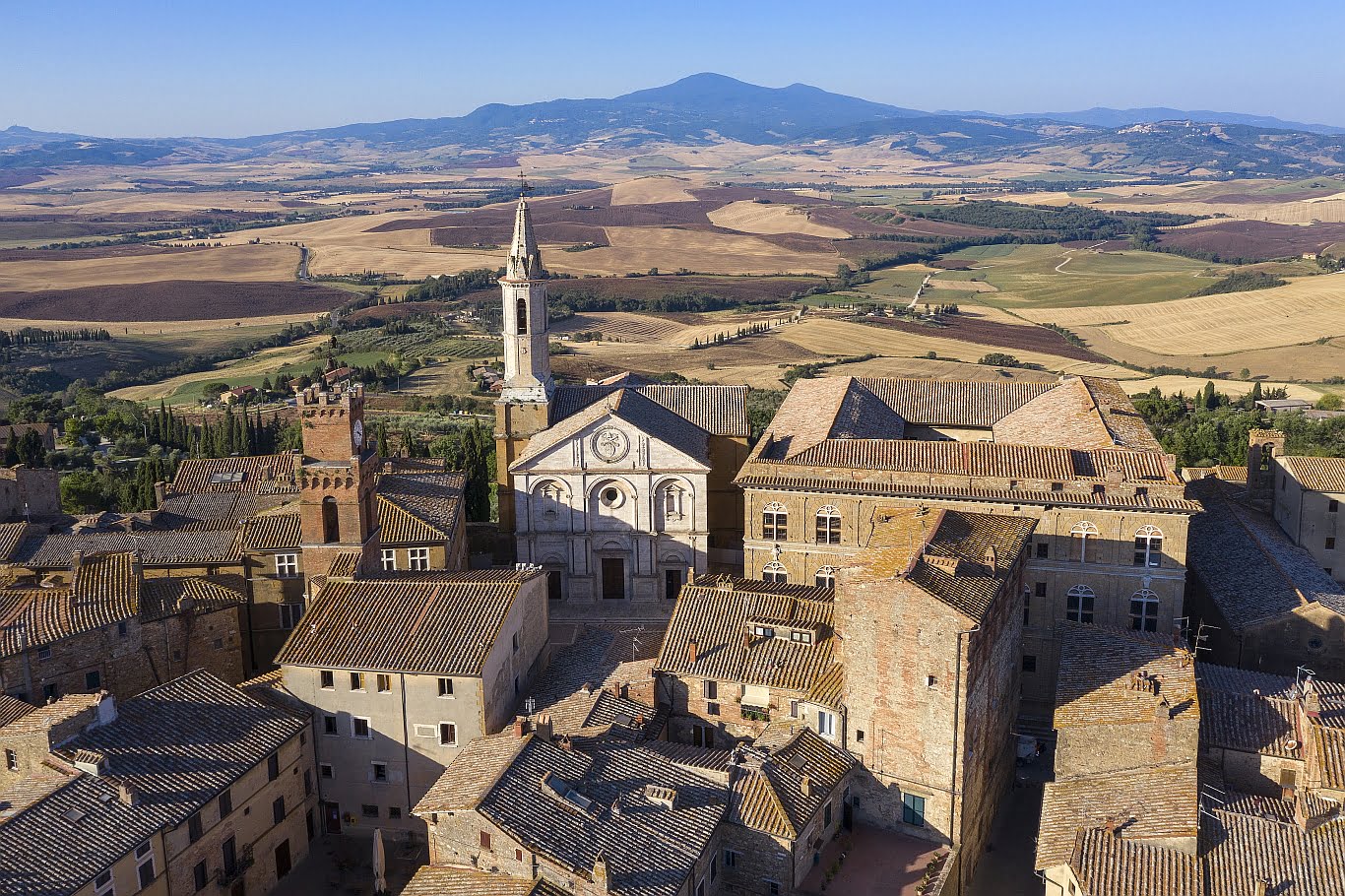
Designed as an ideal Renaissance city, this village features symmetrical plazas and palazzi commissioned by Pope Pius II. Walk the pedestrian perimeter walls for views over the valley.
Walk the western wall path for valley vistas.
The Val d'Orcia is not a single monument with a gate and a turnstile — it is a 60,000-hectare working farmland valley in the Province of Siena, inscribed by UNESCO in 2004 for a landscape that Renaissance painters treated as an ideal. That structure changes how you plan. This val d'orcia what to see guide sets out what the valley actually contains, why the answer is a route rather than a list, and where the individual charges appear.
Quick answer
Entry to the Val d'Orcia costs 0 EUR, because the region itself is open countryside accessible 00:00–23:59 every day; individual sites and museums may charge fees. The core sights are Pienza, Montalcino, San Quirico d'Orcia, Bagno Vignoni and Radicofani, linked by cypress-lined farm roads. Most visitors need two full days to cover them without rushing.
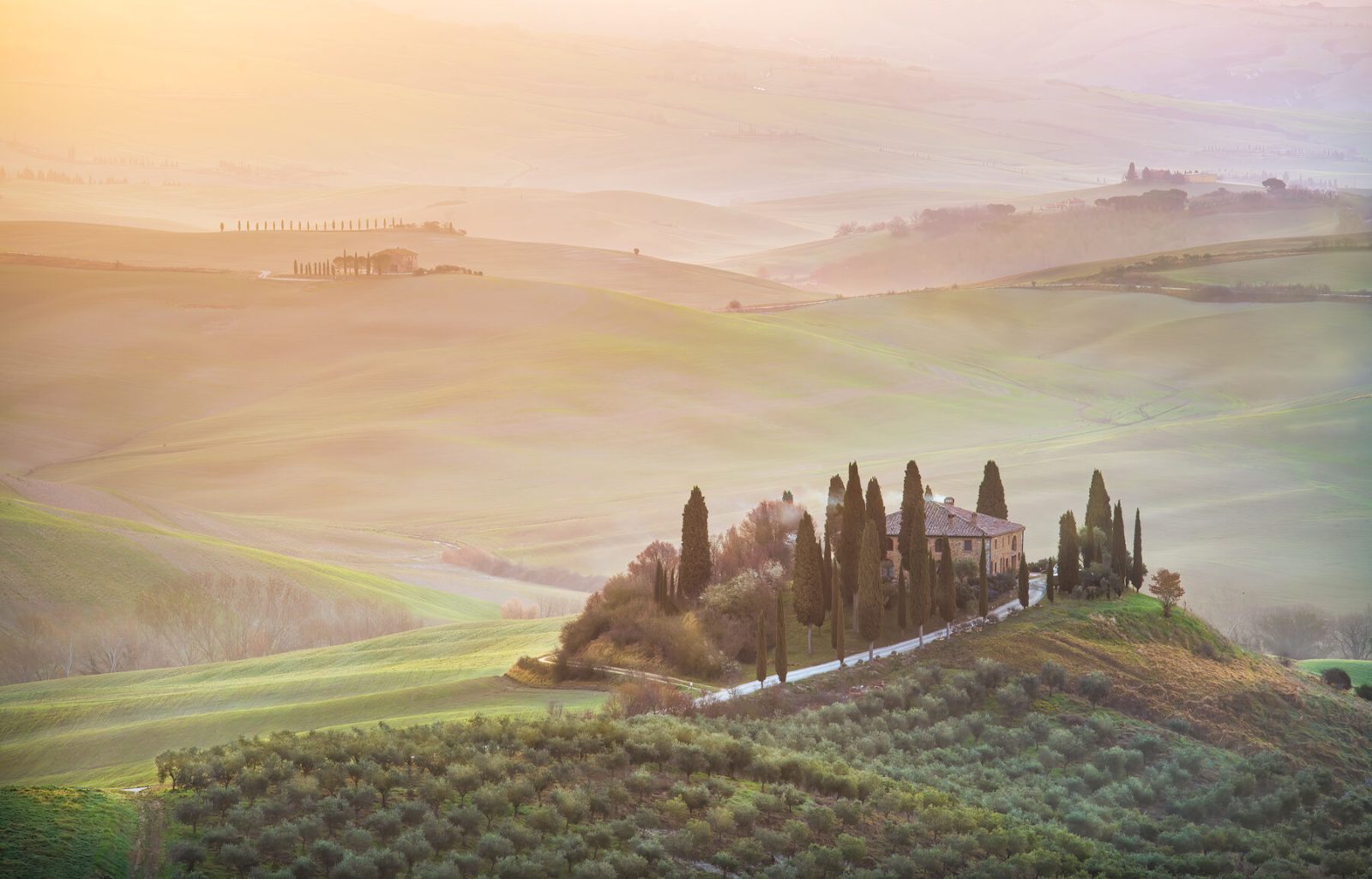
Pienza was demolished and rebuilt in four years. Pope Pius II, born in the village then called Corsignano, hired Bernardo Rossellino in 1459 to replace his birthplace with a model Renaissance town, and the result — Piazza Pio II, the Palazzo Piccolomini, the trapezoidal square that widens the view of Monte Amiata — remains the only planned humanist town centre in the valley. Everything else in the Val d'Orcia grew the slow way, out of grain, sheep and Sangiovese. That mixture explains why val d'orcia what to see resists a simple ranking. The valley holds no single dominant building. It holds a distributed set: the travertine thermal basin in the middle of Bagno Vignoni's main square, where Catherine of Siena bathed and where the piazza is water rather than paving; the Collegiata dei Santi Quirico e Giulitta in San Quirico with its Lombard-carved portals; the fortress at Montalcino above the Brunello vineyards; the isolated Rocca of Radicofani on its basalt plug; and the Abbazia di Sant'Antimo just outside the boundary, in pale local stone. Between them run the working farm tracks that made the region famous — the Podere Belvedere approach, the cypress ring at the Cappella della Madonna di Vitaleta, the crete senesi clay ridges north toward Asciano. The practical consequence is that a valley of this scale is driven, not walked. Distances between the main villages run 10 to 25 kilometres, and the connecting SP roads are narrow, unlit and often unpaved where the best views are. Visitors who treat the Val d'Orcia as one stop tend to see one hill town and leave. Those who allocate two days can pair a morning of villages with an afternoon of vineyards, or split the valley east–west along the Via Cassia. Cosa vedere in Val d'Orcia also depends on the calendar. In August the wheat is already cut, so the fields read as gold stubble rather than green; the region turns green again in late autumn and stays so through May. Wine harvest falls in September and October, which is when Montalcino and Montepulciano cellars are busiest and least flexible about walk-ins. The rest of this val d'orcia what to see guide breaks out the individual landmarks, the timing, the camera positions, the road access and what the paid sites within the region charge, so this page stays with the shape of the valley rather than the fine print of any one stop.
“The valley holds no single dominant building — it holds a distributed set, and the road between them is half the point.”
The Val d'Orcia landscape is defined by a collection of hilltop villages and isolated historical structures that reflect centuries of agricultural and architectural development. These landmarks provide structure to the UNESCO World Heritage site.
Designed as an ideal Renaissance city, this village features symmetrical plazas and palazzi commissioned by Pope Pius II. Walk the pedestrian perimeter walls for views over the valley.
Walk the western wall path for valley vistas.
Perched on a hill, this fortified town is known for its medieval fortress and history of viticulture. The Rocca di Montalcino allows access to ramparts overlooking the surrounding estates.
Climb the fortress ramparts for a 360-degree view.
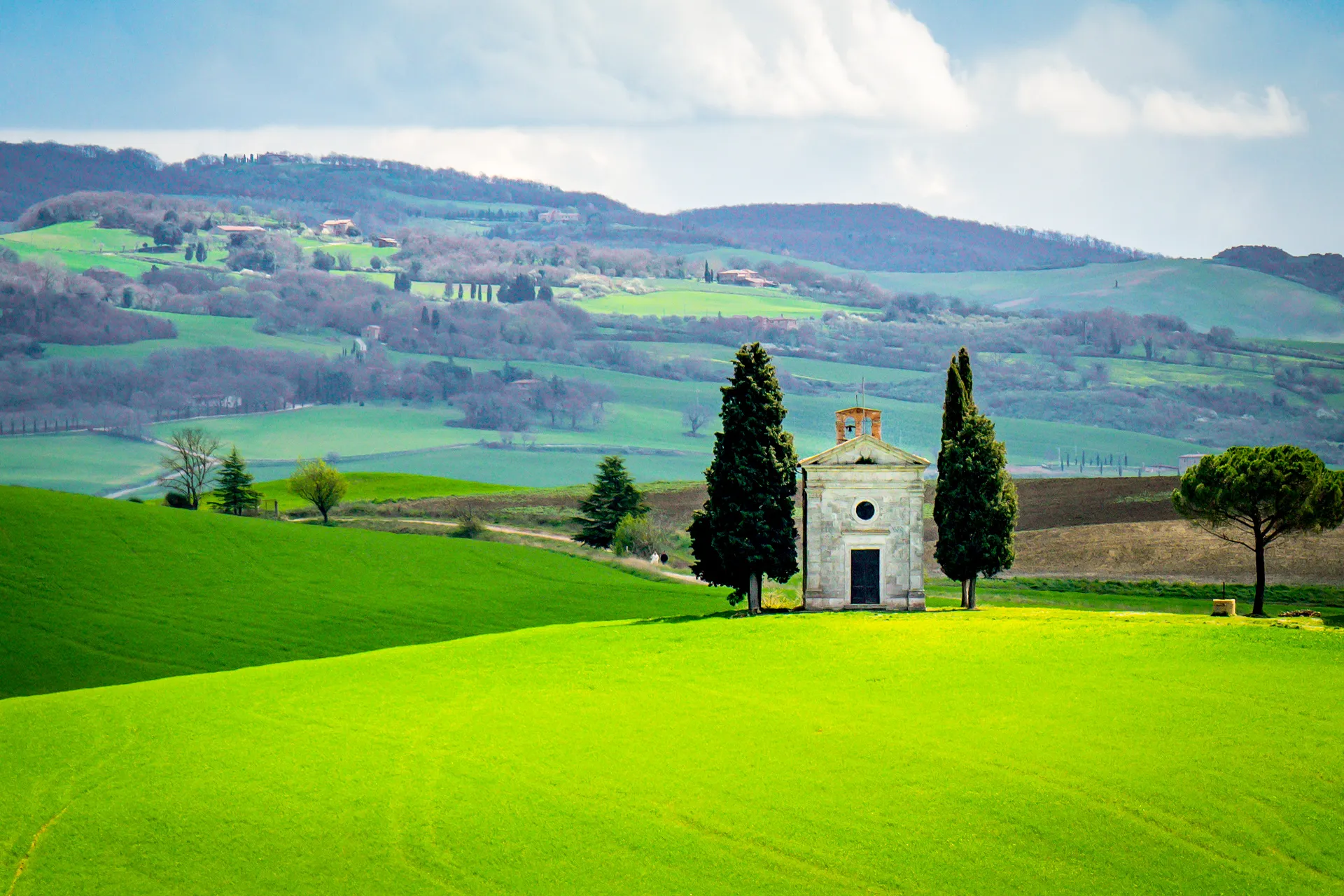
This small, isolated chapel is surrounded by rows of cypress trees and is frequently cited as a representation of the rural landscape. It sits along the road between San Quirico and Pienza.
Visit during the morning light to avoid shadows.
A well-preserved village that serves as a historic stop along the Via Francigena pilgrimage route. The Horti Leonini gardens offer a structured example of 16th-century Italian landscaping.
Enter the lower garden for geometric topiary views.
This village is notable for its central square, which consists of a large thermal pool rather than a traditional paved surface. Water flows from an ancient underground spring.
Look down from the park for pool reflections.
The best arrival window is 06:00–10:00 to capitalize on soft morning light and cooler temperatures before midday crowds arrive. Aligning your visit with seasonal agricultural shifts, such as the harvest or the planting cycles, further defines the experience of the landscape.
Mild, 15°C–22°C. Fields are vibrant green and poppies bloom across the valley floor.
Cool, 10°C–18°C. Vineyards turn shades of gold and amber during the harvest period.
Warm, 25°C–32°C. Wheat fields turn golden before the harvest in early July.
—; optimal light for photography and cooler temperatures before midday crowds.
Verdict: For the quietest experience and best light, choose Tuesday to Thursday, arriving between 06:00–10:00 during April or October.
06:00–10:00
This small chapel sits isolated among rolling hills, offering a classic composition from the roadside path.
06:00–10:00
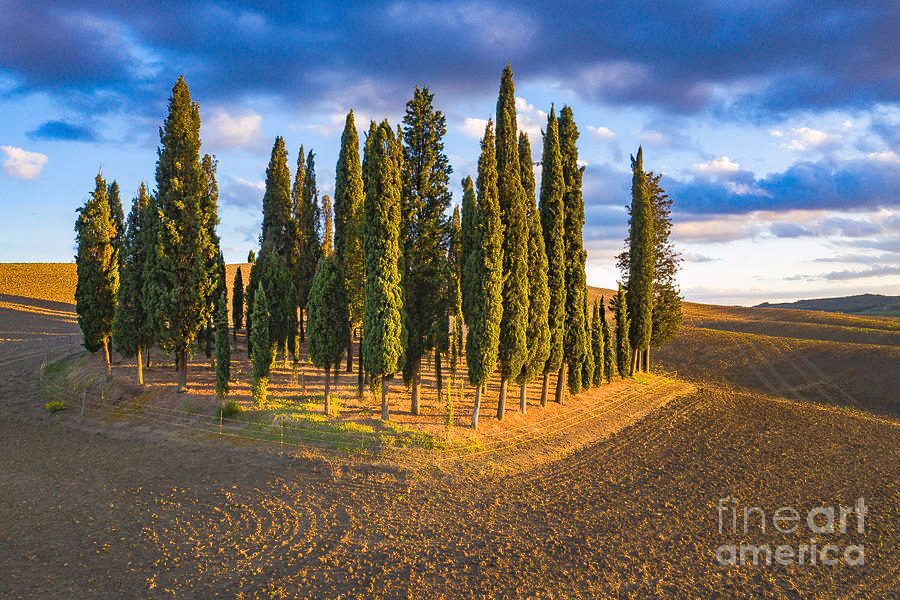
These iconic circular clusters of cypress trees are visible from the SP146 road with a telephoto lens.
06:00–10:00
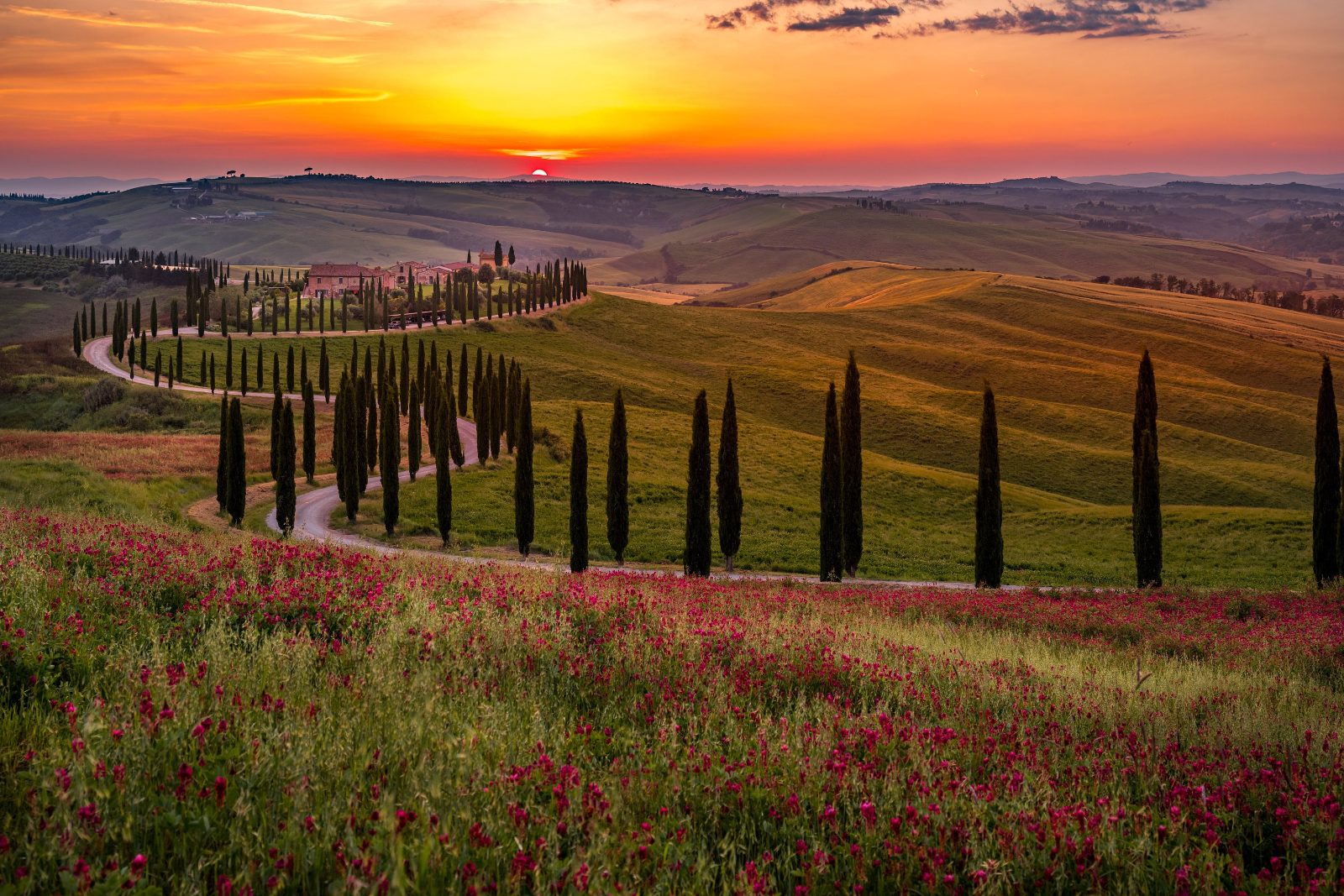
The winding road lined with cypress trees leads up to this farmhouse, best captured from the ridge opposite.
06:00–10:00
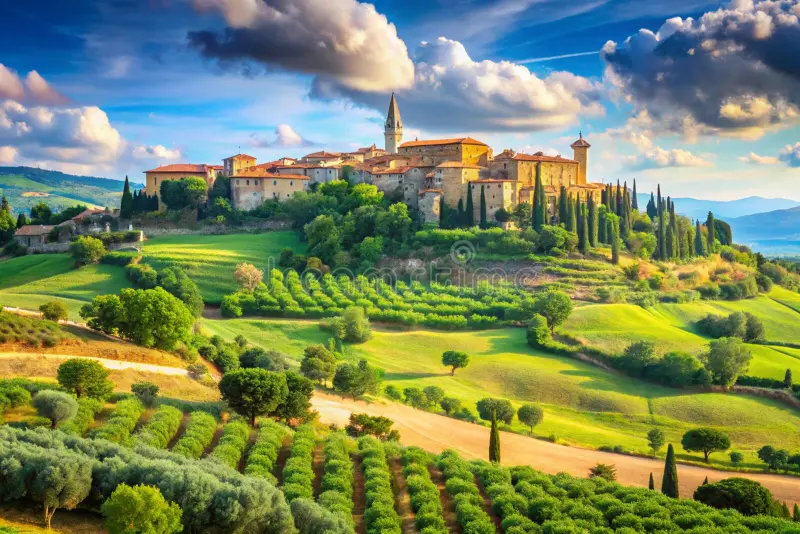
The city walls provide an elevated vantage point looking out over the expansive valley floor.
Val d'Orcia is located in the Province of Siena, Tuscany, and is best accessed by private vehicle to navigate the rural landscape efficiently. The region is well-connected to major Tuscan hubs via regional roads.
SR2 from Siena to San Quirico d'Orcia
A1 motorway towards Chiusi-Chianciano Terme
Autolinee Toscane (Tiemme) from Siena to San Quirico or Pienza
To maximize your experience, aim for the best arrival window of 06:00–10:00 to secure parking at key sites and enjoy cooler temperatures before midday crowds arrive.
Exploring the Val d'Orcia region is free of charge, as it is a public territory. Costs are only incurred when entering specific museums, historical sites, or private venues located within the villages.
Verdict: A typical adult pays 0 EUR for regional access, with additional costs depending solely on personal choices to enter specific ticketed museums or cultural sites.
Val d'Orcia consists of public roads and landscapes accessible at all times. Please note that individual museums, churches, and cultural sites within the region operate on their own specific schedules.
Extending your itinerary beyond the immediate landscape allows for a deeper appreciation of the region's cultural and viticultural heritage. These nearby destinations complement a visit to Val d'Orcia by providing historical context and complementary tasting experiences.
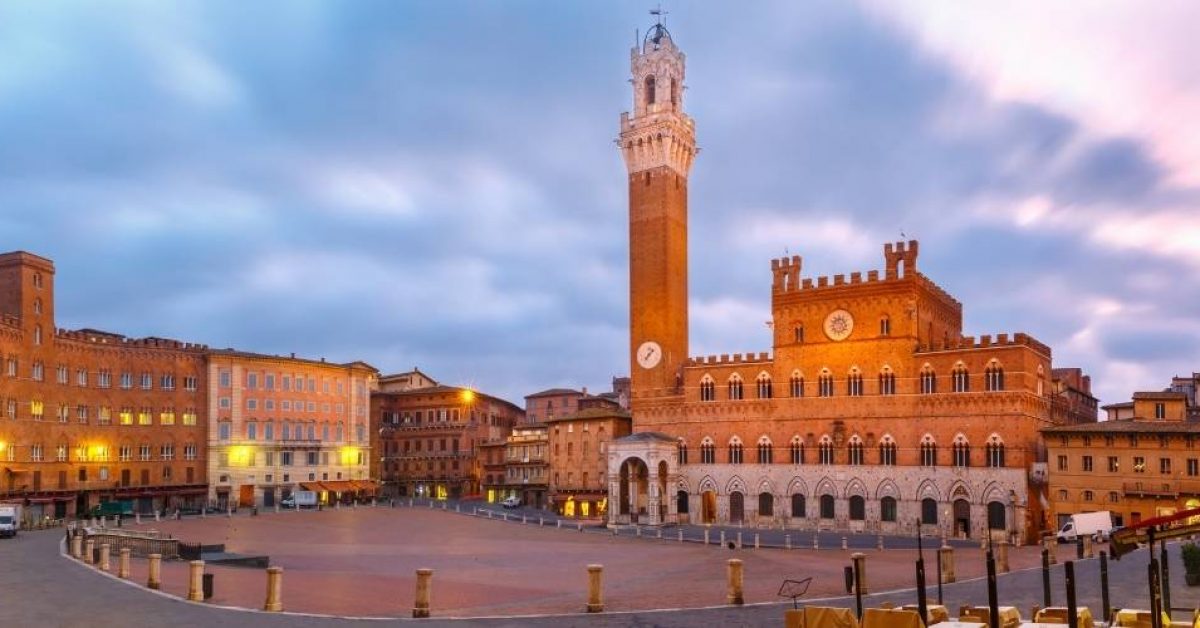
45 min drive
This medieval city provides a contrasting urban experience with its preserved architecture and historical significance.
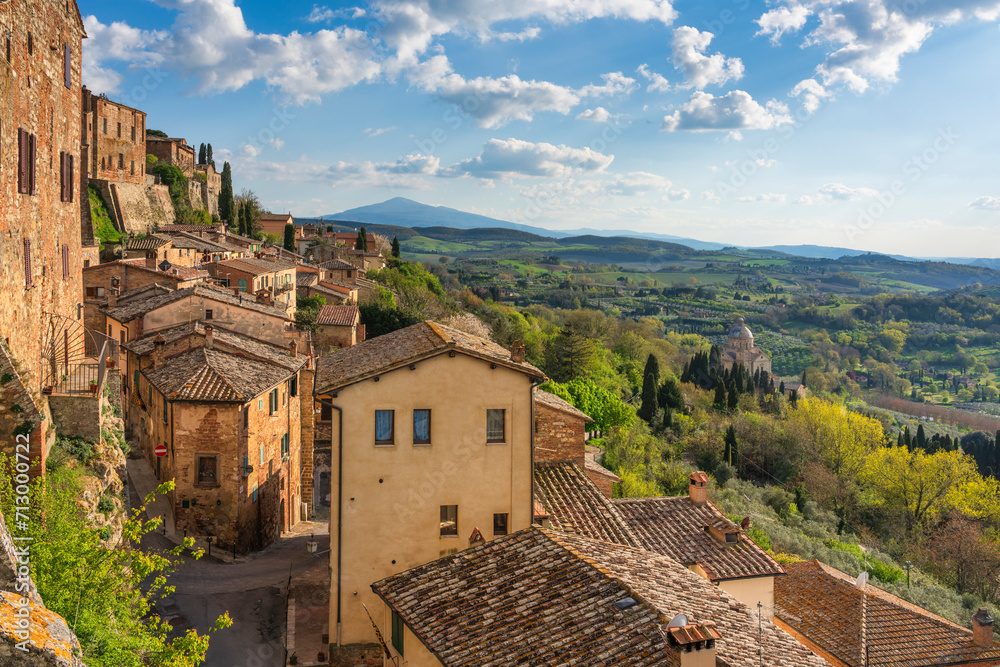
30 min drive
Known for its elevated position and wine production, this town offers a logical extension for those exploring regional varietals.
15 min drive
Located within the heart of the valley, this town is frequently paired with nearby vineyard visits due to its Renaissance urban planning.
Everything you need to know about val d'orcia what to see
To organize your trip, focus on the cluster of medieval hill towns and UNESCO heritage sites that define the region. Mapping your route between Pienza, Montepulciano, and Montalcino helps you maximize your time while exploring the rolling hills. You can view our recommended route itineraries to better plan your visit.
The region itself is an open landscape, meaning there is an entrance fee of 0 EUR for general access. While specific museums, chapels, or historic wine cellars may charge their own fees, the stunning vistas and countryside roads are free to traverse. Check individual site listings if you plan to enter specific monuments.
When considering Val d'Orcia what to see, prioritize the iconic cypress-lined avenues, the Pienza cathedral square, and the fortified walls of Montalcino. These landmarks provide the quintessential experience of the area's Renaissance architecture and agricultural heritage. These spots are ideal for capturing the unique textures of the Tuscan countryside.
The best arrival window for your visit is between 06:00–10:00. Arriving early ensures optimal light for photography and allows you to enjoy cooler temperatures before the midday crowds arrive. This timing also provides a quieter experience when navigating the narrow lanes of the smaller villages.
Families will find the region welcoming, as the outdoor spaces and open air are excellent for children. Many local farms and producers offer experiences that allow younger visitors to engage with the natural environment. Ensure you prepare for walking on cobblestone streets, which may be challenging for strollers.
The most common mistake is trying to visit too many locations in a single day, which leads to rushing through the experience. We recommend spending adequate time in each village to appreciate the atmosphere rather than simply checking off a list. Spreading your activities out allows for a more relaxed pace consistent with the local lifestyle.
Best Wine Tours in Val d'Orcia
Read more Tickets & toursVal d'Orcia Tuscany Wine Tours
Read more Tickets & toursBrunello Wine Tour with Montalcino and Montepulciano
Read more GuideVal d'Orcia Restaurants
Read more Tickets & toursVal d'Orcia Wine Tours from Florence
Read more Tickets & toursVal d'Orcia Wine Tasting Experiences
Read more Tickets & toursBrunello di Montalcino Wine Tours
Read more