11 hr 30 min
Val d'Orcia Countryside Tour with Wine Tasting from Florence
Full-day trip from Florence through Tuscany's Val d'Orcia, with two wine tastings and medieval hill towns.
Reserve
Hand-picked by our editors — only the best 5 experiences from 140 reviewed.
Verified partners for every tour, free cancellation where available, and instant confirmation on every booking.
11 hr 30 min
Full-day trip from Florence through Tuscany's Val d'Orcia, with two wine tastings and medieval hill towns.
Reserve
1 hr
Explore a historic Montepulciano cellar and taste five local wines paired with bruschetta.
Reserve
9 hr
Full-day trip from Siena to three Brunello wineries, Montalcino, an ancient abbey, and a Tuscan lunch.
ReservePrices from verified partners. Availability updates in real time at checkout. Free cancellation policies apply where shown.
The landmarks, rooms, and views travelers on this tour remember — all visible on a single visit.
This iconic vineyard is a cornerstone of the estate's biodynamic viticulture and features prominently in many vineyard walks
Le Capezzine Cellars
Vigna Tonda
Estate Chapel
Wine Shop Enoteca
Single-estate visits provide intimate technical expertise, while multi-town excursions offer a broader overview of the landscape; most visitors seeking the best wine tours in val d'orcia find the estate model more rewarding for oenophiles.
| Feature | Top pick Estate Cellar Tour | Regional Day Trip |
|---|---|---|
Focus |
Technical viticulture | Landscape and culture |
Travel Style |
Stationary immersion | Transit-heavy movement |
Wine Depth |
In-depth sensory analysis | General tasting profiles |
Regional Breadth |
Single terroir | Multiple Tuscan villages |
Logistics |
Minimal travel required | Complex multi-stop coordination |
Price Point |
Fee-based per person | Varies by group package |
| See tickets → |
Verdict: Choose the estate cellar tour for dedicated viticulture insight, or select the regional day trip to maximize your exposure to the best wine tours in val d'orcia tours through varied Tuscan townscapes.
Choose your ticket, select your date, and reserve in under two minutes. Secure checkout handled by our verified partner.
Instant confirmation by email, with a mobile voucher you can save offline. No printing, no queuing at a collection desk.
Arrive at the entrance, show your voucher on your phone, and walk in. Most tickets include priority or skip-the-line access.
Practical details for your visit straight from our verified partners — hours, access, rules, and how to get there.
Casual and comfortable attire is recommended for these best wine tours in val d'orcia tours. Wear sturdy footwear suitable for walking through vineyards and potentially uneven cellar floors.
Large backpacks and bulky luggage should be left in your vehicle as they are not permitted inside the cellar areas. Small personal handbags are allowed during your visit to these best wine tours in val d'orcia.
Non-commercial photography is encouraged throughout the estate. Please be respectful of other guests and do not disrupt guided activities when capturing images.
The wine shop and main tasting areas are generally accessible. Guests with limited mobility should contact the estate in advance to discuss specific needs for cellar access.
Families are welcome, but guests must be of legal drinking age to participate in wine tastings. Non-alcoholic beverage options are limited, so please check availability prior to arrival.
Outside food and beverages are not permitted. The estate offers seasonal cutting boards and local delicacies available for purchase during your best wine tours in val d'orcia experience.
Best time to go, insider tips, nearby landmarks, and the cancellation fine print — flip through to skim what matters to you.
Flexible, no hidden fees.
Cancellations must be made within the window specified at the time of booking to qualify for refunds. Entrance to the grounds is 0 EUR, while specific wine tastings and guided tours are fee-based per person.
Sangiovese was documented in Tuscany in 1590, more than two centuries before Brunello di Montalcino was isolated as a clone. That long apprenticeship explains the valley. Val d'Orcia is not an old wine region by accident; it is one by sediment, altitude and stubbornness. The soils here are pliocene marine clay, marl and galestro — the seabed of a vanished gulf, lifted and dried into the ridges that now carry vines. UNESCO inscribed the Val d'Orcia as a World Heritage cultural landscape in 2004, citing the way Sienese landowners of the fourteenth and fifteenth centuries redrew farmland as an idealised image of good government. The cypress avenues, the isolated farmhouses, the wheat-and-vine mosaic: these were designed. Ambrogio Lorenzetti painted that ideal in Siena's Palazzo Pubblico around 1338. Travellers who take the best wine tours in val d'orcia are moving through a painting that became agricultural policy. The valley's two great appellations sit on opposite shoulders of it. Montalcino received Italy's first DOCG in 1980 for Brunello, a wine aged a minimum of five years, two of them in oak. Montepulciano answered with Vino Nobile, ennobled in the eighteenth century by the poet Francesco Redi, who ranked it above all other Tuscan wines in verse. Between them lies Pienza, the fifteenth-century pope-town of Pius II, rebuilt by Bernardo Rossellino from 1459 as the first fully planned Renaissance townscape — and the source of the pecorino that arrives beside almost every tasting flight. Cellar architecture matters as much as vineyard geology. Estates around Valiano di Montepulciano store barrels in tufa-cut cellars where the rock holds a constant cool temperature without machinery, some of the tunnels predating the buildings above them by centuries. Others have gone the other way: the sunken circular cantina, the concrete amphora, the gravity-fed winery built into a hillside so grapes never meet a pump. Both approaches coexist within a few kilometres of one another. The estate at Via Colonica 1, Valiano di Montepulciano, sits at the eastern edge of this system, with grounds open free of charge and tastings and guided cellar visits arranged on a per-person basis. Its position explains why so many operators route through it: Montalcino, Pienza and Montepulciano form a triangle roughly forty minutes across, and a single day can legitimately touch all three. What keeps the valley relevant is not nostalgia. Producers have spent two decades adjusting harvest dates upward as summers lengthen, replanting at higher elevations, and reviving neglected clones. The best wine tours in val d'orcia now routinely include that conversation — soil pits, canopy management, the argument between botte grande and barrique — alongside the glass itself. Visitors arrive expecting scenery. They leave with an unusually specific account of how a landscape and a wine came to explain each other.
"The cypress avenues and isolated farmhouses were not accidents of farming — they were a fourteenth-century idea of good government, planted."
A step-by-step walkthrough of the visit — what you'll see, how long each stage takes, and the details that matter.
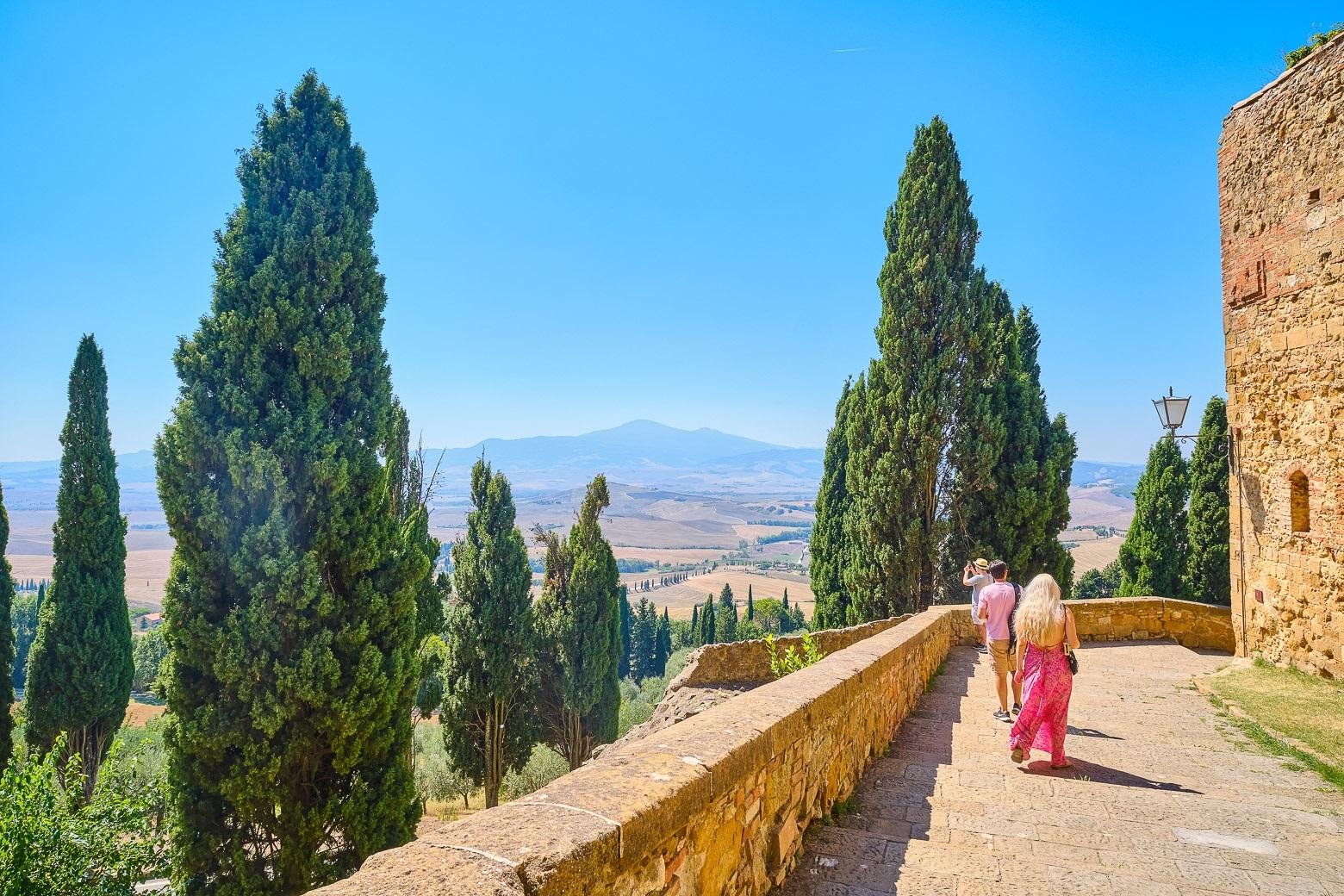
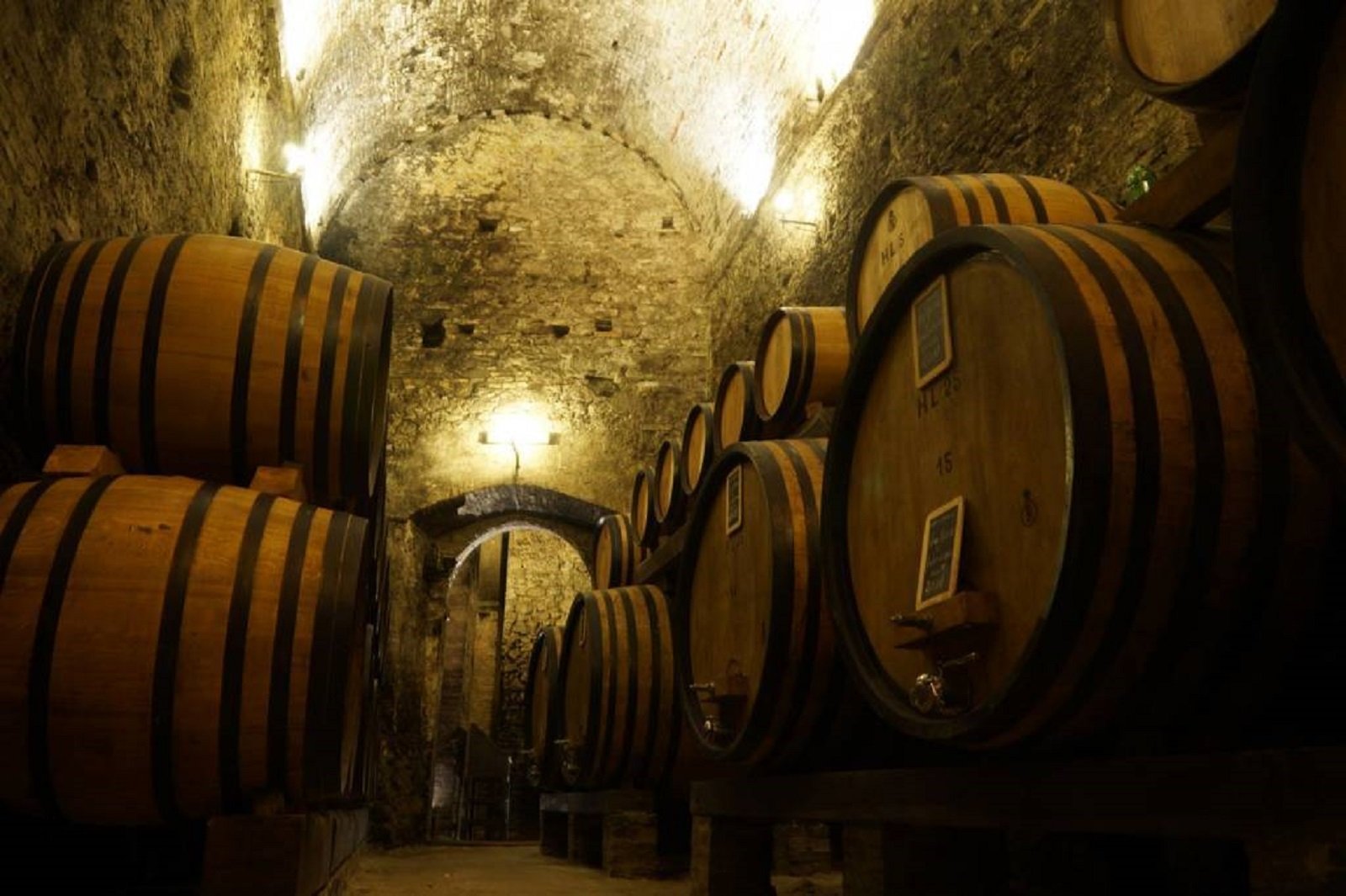
You leave the main road and climb a gravel track between cypresses, and the temperature drops the moment you step out. Entry to the grounds costs nothing, so you walk first: past the vine rows, down toward the low stone buildings, before anyone hands you a glass. Grounds open at 10:00 on weekdays and Saturday, from 12:00 on Sunday, closing at 18:00. You aim for the 10:00–17:00 window, which keeps you clear of the worst mid-day heat and leaves room for a full cellar visit. Inside, the light goes. A guide walks you down into rock-cut corridors where barrels sit in ranks and the air smells of damp stone and lees. You learn to read a stave end. You put a hand on a botte grande and feel how little the summer outside has reached it. Then the tasting room. Three or four glasses, poured in sequence, with pecorino from Pienza and unsalted Tuscan bread between them. You hold the sangiovese to the window and watch the rim go orange with age. A single best wine tours in val d'orcia tour can also carry you onward — a Brunello tasting inside a Montalcino castle with lunch, or a countryside loop through Montepulciano and Pienza with tastings at each stop. By 17:00 you are back on the track, the valley gone gold behind you, an address in your notes: Via Colonica 1, Valiano di Montepulciano.
While the grounds are largely accessible, cellar sections may present challenges; please contact the winery beforehand to verify your tour route.
The winery is open 10:00–18:00 Monday through Saturday, and 12:00–18:00 on Sunday.
Yes, reservations are highly recommended for all guided cellar experiences to ensure your spot on the best wine tours in val d'orcia.
Entrance to the grounds is 0 EUR; however, specific tastings and tours are fee-based per person.
Children are welcome to accompany adults, but tastings are restricted to those of legal age and guided tours should be booked with consideration for the group duration.
Photography is permitted in the vineyards and common areas, provided it remains non-commercial and does not interfere with other visitors.
Yes, the estate offers artisanal cutting boards with local cheeses and meats, available for purchase with your wine tastings.
The best arrival window is 10:00–17:00 to avoid mid-day heat and ensure sufficient time for your tour before the estate closes.
While you can visit the wine shop during opening hours, the best wine tours in val d'orcia require advance booking to guarantee cellar access.