English| EUR
Suggested for you
More currencies
Choose a language
The valley reads as a single landscape from the road, yet its kitchens belong to separate hill towns, each keeping its own week. This Val d'Orcia restaurants guide sets out how those towns divide the map, why the produce behind pici, pecorino di Pienza and Brunello di Montalcino barely varies between dining rooms, and what that means for planning. It frames the practical detail carried in the sections below.
Quick answer
Val d'Orcia is a geographical region in the Province of Siena, not a single venue, so there is no entrance fee — 0 EUR — and no shared opening hours to check. Its dining rooms cluster in the hill towns: Pienza, Montalcino, San Quirico d'Orcia, Bagno Vignoni, Castiglione d'Orcia. Most run two services daily, keep one weekly closing day, and fill quickly through August.
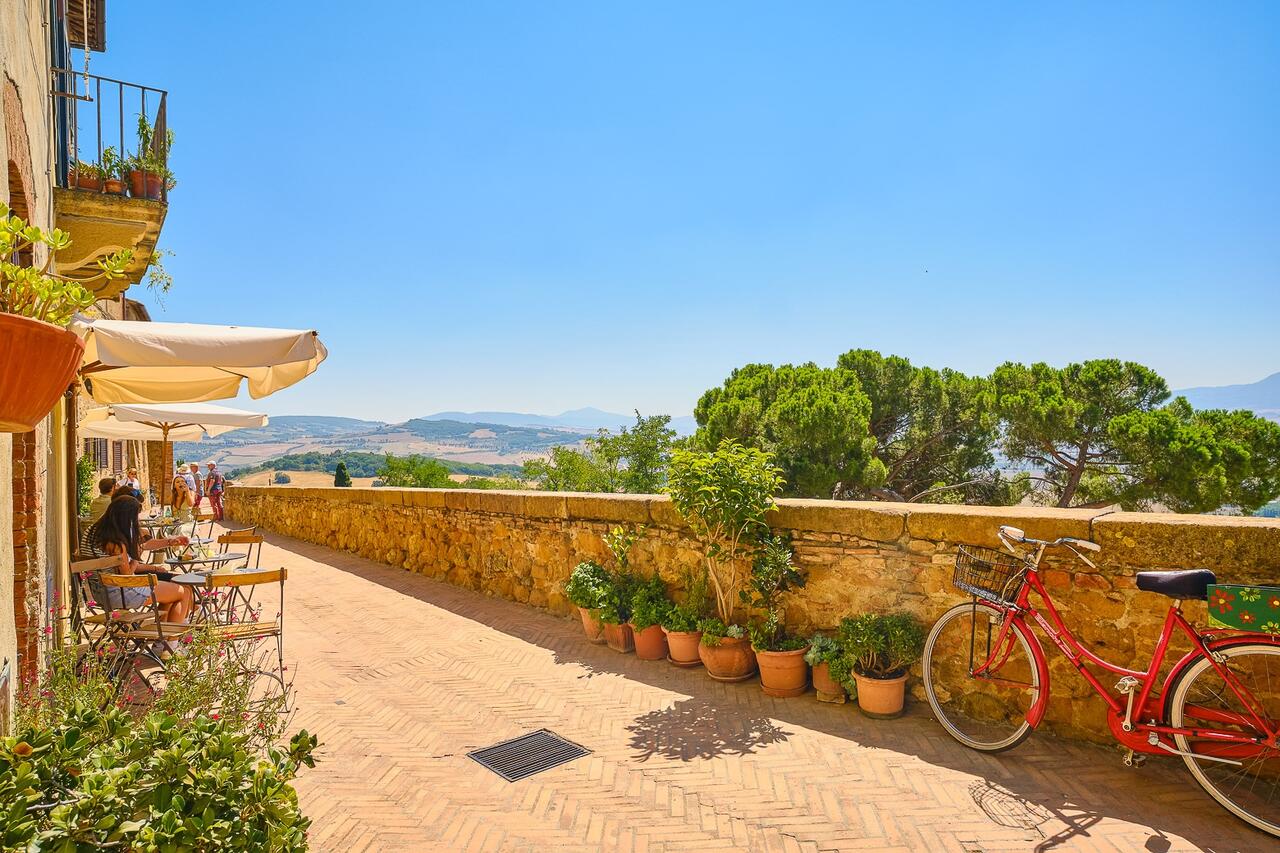
Much of the sheep's milk behind the valley's cheese comes from farms founded by Sardinian families who resettled in southern Tuscany during the 1950s and 1960s. Their arrival reshaped the plateau around Pienza and, with it, the menus travellers now read. Val d'Orcia restaurants sit inside that inherited pattern rather than above it. The valley holds no restaurant district and no dining quarter, and no gate or entrance fee marks its edges. Kitchens are dispersed between hill towns — Pienza, Montalcino, San Quirico d'Orcia, Castiglione d'Orcia, Radicofani — separated by ridge roads that stretch short distances into long ones. The region entered the UNESCO World Heritage list in 2004 as a cultural landscape, valued because Sienese landowners shaped it deliberately for how it would look. That inheritance is agricultural, and it still governs what reaches the table. Pici, the thick hand-rolled pasta of southern Siena, remains the standard first course. Pecorino di Pienza, aged under ash or walnut leaves, anchors the cheese board. Cinta senese pork, Orcia DOC bottles, Brunello di Montalcino and Vino Nobile from neighbouring Montepulciano fill out a list that shifts little from one dining room to the next. Ristoranti in Val d'Orcia therefore compete on execution, sourcing and setting rather than invention. Rhythm matters more than choice. Kitchens across the valley observe a long afternoon pause between lunch and dinner, and most keep one fixed closing day each week. Agriturismi beyond the town walls often serve a single sitting and expect a reservation a day or more in advance. Sunday lunch is the busiest service of the week, a family occasion that fills dining rooms in San Quirico d'Orcia and Castiglione d'Orcia before visitors think to ask. Coperto, the per-person cover charge, is standard across the province and appears on the bill rather than on the board outside. Planning follows from that geography. The valley's recommended arrival window of 07:00–10:00 belongs to photographers chasing low light across the ridges, not to anyone chasing lunch. Travellers who settle on a base town first, then choose within reach of it, lose less of the evening to unlit ridge roads. Transport, seasonal timing and specific addresses are handled in the sections below; this overview of Val d'Orcia restaurants exists to make those details legible.
“The valley holds no restaurant district — its kitchens are scattered between hill towns, and the map decides the evening.”
Dining in Val d'Orcia centers on farm-to-table traditions, where trattorias and agriturismi emphasize locally sourced ingredients like pecorino cheese, pici pasta, and regional olive oil. Visitors can choose between refined dining in historic hill towns or casual meals at rural estates located directly within the agricultural landscape.
restaurant
Located in the heart of Montepulciano, this establishment focuses on traditional Florentine steaks and house-made pasta dishes.
restaurant
Situated in Siena, this cellar-based eatery serves classic Tuscan recipes utilizing ingredients sourced from surrounding valley farms.
restaurant
This organic agriturismo located in Pienza offers dining directly on a working farm with views of the valley scenery.
market
The weekly market in Pienza provides access to local pecorino cheese and artisanal bread, serving as an escape from standard restaurant menus.
Val d'Orcia is located in the Province of Siena, Tuscany, Italy. Reaching restaurants and vineyards dispersed throughout this rural region requires a private vehicle, as public transit does not serve individual estates.
SR2 (Via Cassia) highway through Province of Siena
Autolinee Toscane regional lines to Pienza or San Quirico d'Orcia
Private hire from Chiusi-Chianciano Terme station
The best arrival window is 07:00–10:00, as early morning light provides the best conditions for navigation and photography across the valley landscape before reaching your destination.
The optimal window for dining in Val d'Orcia is during the shoulder seasons of spring and autumn, when local harvests dictate seasonal menus and crowd levels are moderate. Arriving between 07:00–10:00 ensures a peaceful start to the day before touring the valley's culinary destinations.
Mild, 18°C–25°C
Menus feature fresh pecorino and seasonal vegetables. Reservations are recommended for popular establishments.
Cooler, 12°C–20°C
This period aligns with the grape and olive harvests. Expect robust dishes featuring truffles and wild game.
—
Visiting mid-week offers a quieter atmosphere. Local restaurants are less pressured than during weekend peak hours.
Verdict: The best period for dining is mid-week during May or October, paired with an early morning start between 07:00–10:00.
Navigating the dining landscape in this region requires an appreciation for local customs and advance preparation.
Most traditional trattorias have limited seating and prioritize reservations made at least several days in advance, especially during the peak harvest season.
Many establishments adjust their operations based on agricultural cycles or local holidays, so check restaurant websites or social media channels for mid-week closures before traveling.
Dining here is considered a deliberate experience; expect meals to last several hours as kitchens prepare food to order using local ingredients.
Many restaurants in the valley partner with nearby vineyards to offer local pours that are not available in retail stores, often at a lower price point than bottled options.
Menus often feature limited quantities of seasonal dishes based on what was sourced from local markets that morning, so prioritize these offerings over standard menu items.
While larger restaurants accept cards, smaller family-run establishments in remote villages occasionally prefer cash, so carry euros to avoid inconvenience.
Everything you need to know about val d'orcia restaurants
Many popular val d'orcia restaurants require advance booking, especially during the peak summer months of August. We recommend securing your table early to enjoy authentic regional dishes at your preferred venue.
Visitors often look for local osterias and trattorias that highlight farm-to-table ingredients and regional wine pairings. Exploring these culinary hotspots allows you to experience the true flavor of Tuscany beyond standard tourist fare.
Yes, most establishments in the region are welcoming to families and offer traditional menus that cater to various age groups. Choosing a family-friendly dining spot ensures a pleasant experience while you explore the UNESCO World Heritage landscape.
There is an entrance fee of 0 EUR to access the Val d'Orcia geographical region. You are free to travel through the valley to reach your chosen dining destination without paying any admission costs.
For those planning a visit, the best arrival window is 07:00–10:00 to enjoy the morning light before heading to lunch. This timing allows you to appreciate the hills and cypress-lined roads before settling in at one of the top val d'orcia restaurants.
Traditional Tuscan dining focuses on local specialties such as pici pasta, pecorino cheese, and high-quality olive oil. Pairing these dishes with local vintage labels completes the authentic experience you will find throughout the province of Siena.
Best Wine Tours in Val d'Orcia
Read more Tickets & toursVal d'Orcia Tuscany Wine Tours
Read more Tickets & toursBrunello Wine Tour with Montalcino and Montepulciano
Read more GuideVal d'Orcia: What to See
Read more Tickets & toursVal d'Orcia Wine Tours from Florence
Read more Tickets & toursVal d'Orcia Wine Tasting Experiences
Read more Tickets & toursBrunello di Montalcino Wine Tours
Read more